
Family estate guidance
How to Divide a Loved One’s Belongings Fairly Among Siblings and Heirs
A calm, practical guide to sharing keepsakes, understanding value, and keeping family relationships intact.

A fair way forward
Memories. Fairness. Family.
The funeral is over, the casseroles are gone, and now someone has to say it out loud: who gets what? If you are sorting through a parent’s or grandparent’s home in South Jersey, dividing the belongings among siblings and other heirs can be harder than the paperwork. It is rarely about the furniture itself. It is about memories, fairness, and feeling heard.
With Thanksgiving and the December holidays around the corner, a lot of families in Gloucester County, Cherry Hill, Haddonfield, and the surrounding towns end up having this conversation around the same table. This guide walks through a calm, practical way to divide a loved one’s personal property so a hard season does not turn into a lasting family rift.
Start With What the Will Says and Who Is in Charge
Before anyone carries a single box out the door, find out whether the will names specific items. Those instructions should guide the distribution, with the executor or estate attorney confirming what can be released and when. Everything else is generally handled by the executor, who is responsible for the estate’s property until it is properly distributed. If you are the one who was just named, our step-by-step guide for new executors covers the first things to do.
It also helps to ask the executor or the estate attorney before relatives start taking things "just to keep them safe." Even well-meaning removals can create hurt feelings later, and they make it harder to keep an accurate record of what was in the home. If the family disagrees about the will itself, or there is no will, that is the time to bring in an estate attorney.
Take Inventory and Photos Before Anyone Makes Decisions
You cannot divide fairly what you have not counted. Walk through the house room by room and photograph everything of interest, including the basement, attic, and garage, where some of the most overlooked items tend to be. Keep a simple shared list or spreadsheet so siblings who live out of state can see exactly what is there.
As you go, set aside anything that might be worth more than it looks, such as jewelry, coins, art, silver, and older furniture. Fair division gets much easier when everyone has a realistic idea of relative value. Our posts on the value of vintage and antique items and using an appraiser for collectibles explain what to look for, and our antique appraisal services can put real numbers on the pieces you are unsure about.
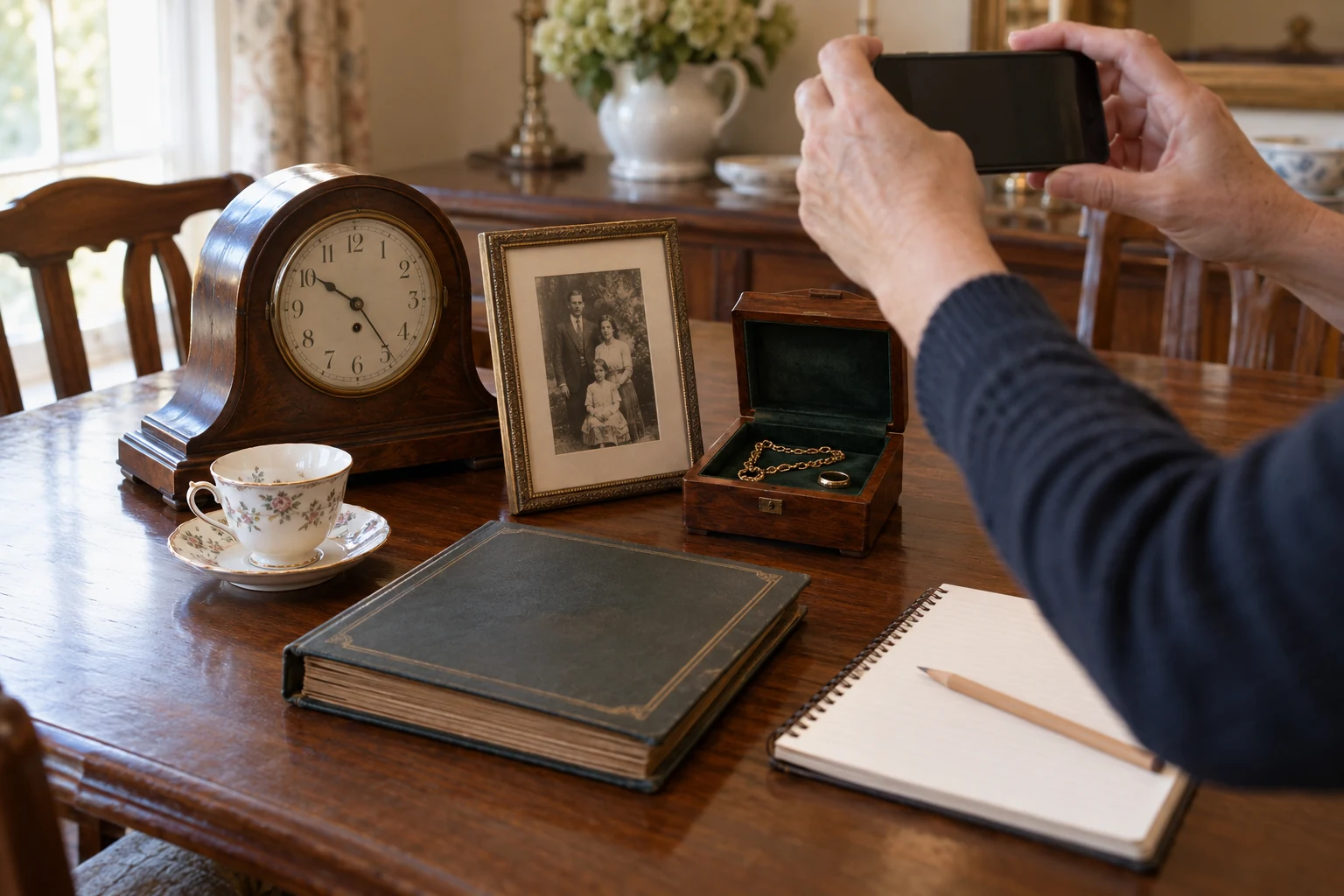
Photograph and list the belongings before anyone makes their picks.
Agree on a Division Method Before You Pick Items
For items the executor confirms are available to divide, the single best way to avoid a fight is to agree on the rules before anyone says "I want that." A few methods families use successfully:
- Round-robin picks. Draw numbers and take turns choosing one item at a time. Reverse the order each round so the person who picked last gets the next first pick.
- A sentimental first round. Each person names a few items that matter most to them before general picking begins. Most people care deeply about two or three things, and this lets everyone secure those early.
- Sticky-note or wish-list method. Everyone privately marks the items they want. Items with only one request go to that person. Items with overlapping requests get discussed.
- Value-balanced picks. When there is a wide range in value, use appraised values so that no one ends up with a much larger share. This works well for estates with jewelry, antiques, or collections.
- Cash equalization. If one sibling wants a valuable piece, they can keep it and the others are made whole with cash or other items of equal value.
Fair does not have to mean identical. It means everyone feels the process was transparent and that they had a real say.
How to Handle the Tricky Categories
Jewelry
Do not guess. A ring that looks flashy may be costume jewelry, and a plain gold chain may be worth far more than expected. Get jewelry evaluated before it is divided. Our guide to what your jewelry is worth is a good starting point, and our jewelry and gold buying service can evaluate specific pieces.
Photos, letters, and family papers
These are often the most meaningful items, and they are easy to share. Scan them so every sibling gets copies, and let the person most willing to care for the originals keep them.
Collections
Coins, figurines, records, and similar collections are sometimes worth more as a complete set. Splitting them up can lower the value. Consider selling the whole collection and dividing the proceeds, or letting one heir keep it and balancing the difference elsewhere.
Items two people want
This happens in nearly every family. Options include trading for another item, rotating custody every year or two, having one person keep the item while others receive a quality photo or a similar piece, or selling it and splitting the proceeds.
Siblings who live far away
Do a video walkthrough of the house, agree up front on who pays for shipping, and let remote siblings make their picks from the photo inventory.
What to Do With the Things Nobody Wants
Once the family has chosen what they want, most homes still have a lot left: furniture, kitchenware, tools, decor, and everything in the closets. You generally have three paths, and we compare them in our guide to estate sale vs. auction vs. donating.
For a full household, an in-home estate sale is usually the most hands-off option. For a few standout pieces, an online auction can bring in competitive bids from a wider pool of buyers. Whatever does not sell can be donated or removed. The executor should arrange distribution of the remaining proceeds under the will or applicable law after addressing estate debts, taxes, and other obligations. Any family agreement should be checked with the estate attorney first. Selling the remaining contents can also take the "who keeps the dining set" debate off the table.
We help families across South Jersey and the Philadelphia area, including Cherry Hill, Collingswood, Washington Township, Marlton, and Haddonfield.
Why a Neutral Third Party Helps
Siblings often disagree about value because each person is attached to different things. An outside appraiser or estate sale professional has no emotional stake in the outcome. When a neutral person says "this table is worth about this much," it takes the pressure off the family and keeps the conversation focused on the plan instead of on each other.
A Simple Plan for the Holiday Season
Treat this as a planning schedule, not a deadline for distributing estate property. Confirm the timing with the executor before any belongings change hands.
- Before Thanksgiving: Get the executor’s go-ahead, photograph and list everything, and arrange appraisals for valuables.
- At Thanksgiving: Use the gathering to agree on a method, not to divide everything on the spot. Keep it short and kind.
- Early December: Run the sentimental first round so everyone gets their most meaningful items.
- January: Decide what remains and schedule an estate sale, auction, or donation pickup. Our post on downsizing in South Jersey and our guide to handling a loved one’s estate can help with next steps.
Tips for Keeping the Peace
- Do not make big decisions in the first days after a loss. Set a date a few weeks out.
- Write down whatever the family agrees on, even if it is just a short email everyone replies to.
- Take breaks. Sorting through a parent’s belongings is exhausting, and it is fine to stop for the day.
- Keep a small "undecided" pile instead of forcing a choice in the moment.
- Remember that the goal is to preserve the relationships that remain.
Frequently Asked Questions
How do you divide personal property among siblings fairly?
Agree on a method first, such as round-robin picks, a sentimental first round, or value-balanced picks. Take a full photo inventory, get valuables appraised, and write down the agreement so everyone has the same understanding.
What if siblings cannot agree on who gets an item?
Try trading for another item, rotating custody, or selling it and splitting the proceeds. If the family is truly stuck, an estate attorney or a neutral mediator can help.
Do we need an appraisal before dividing belongings?
Not for everything. Everyday household items rarely need one. Jewelry, antiques, art, coins, and collectibles are different, and a quick appraisal can prevent unfair splits and costly surprises.
Can I take things from the house before the estate is settled?
Check with the executor and the estate attorney first. Removing items without approval can cause disputes and complicate the estate’s records.
What happens to belongings nobody wants?
They can be sold through an estate sale or online auction, donated, or removed. A professional estate sale company can handle all three so the family does not have to.
Need a Neutral Hand With the House?
Treasure Me Estate Sales helps families across South Jersey and the Philadelphia area appraise, sell, and clear out a loved one’s home, so you can focus on each other. Schedule a free consultation or call us at (856) 298-1999 or 1-800-NOT-JUNK.
This article is for general informational purposes and is not legal, tax, or accounting advice. Consult a qualified attorney or other professional about your family’s specific circumstances.
Compassionate help. Clear next steps.
Make the home one less thing to manage.
We can help you understand the value of what remains and plan an estate sale, auction, or clean-out.